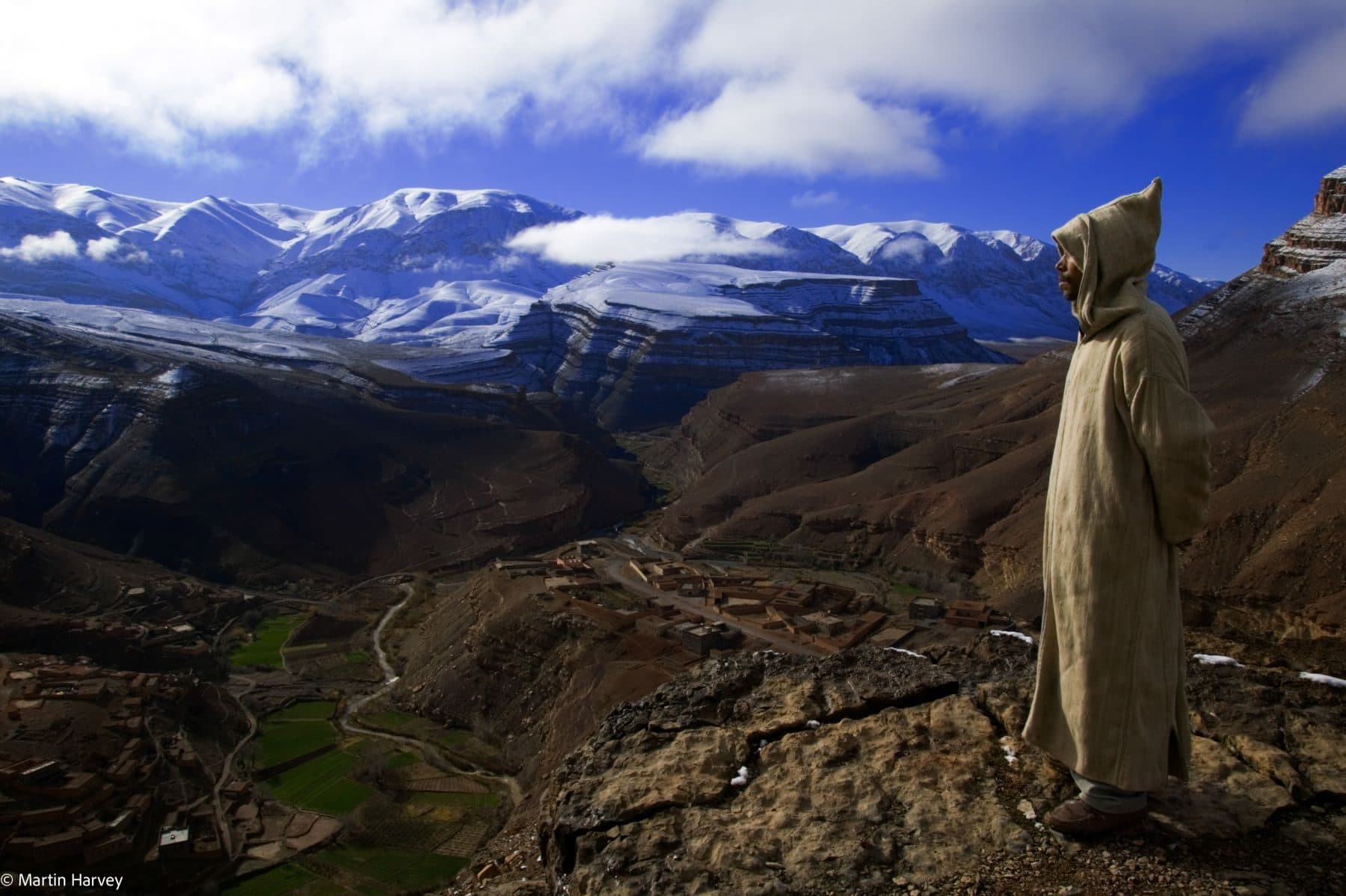
The High Atlas isn't a one-season destination. Spring brings snowmelt and wildflowers. Summer is the busy trekking window. Autumn offers solitude and clear skies. Winter opens the door to serious mountaineering. Each season changes the mountain completely, and each has a case for being the best.
Here's the full breakdown so you can match your trip to your goals.
April – May: Spring
Spring is arguably the most beautiful time in the High Atlas. The lower valleys are green from winter rain, wildflowers carpet the approaches to Imlil, and the Berber villages are at their most photogenic. Snow still covers the upper massif above 3,500m through April and well into May on north-facing slopes.
Toubkal in May is feasible but the South Cirque often carries 50–100cm of compacted snow. Microspikes or crampons are advisable, and some years an ice axe is needed. The reward: almost no other trekkers and crisp, photogenic light.
Who should come in spring:
- Photographers and those who want the valleys looking their best
- Experienced trekkers comfortable with snow travel (May)
- Anyone doing valley tours like the Azzaden or Lac d'Ifni (April is ideal)
June – July: Early and Peak Summer
By June, the upper snowfields have largely cleared from the standard route and summit day is straightforward hiking. This is the most popular period and for good reason: reliable weather, warm nights at the refuge, long daylight hours, and the entire range of routes open.
July is peak season. The Toubkal Refuge fills up; queues form on the summit scree on busy weekends. If you want solitude, go early in the morning or pick a less-trafficked route like Ouanoukrim or Afella.
Who should come in June–July:
- First-time trekkers wanting the safest, most straightforward conditions
- Families with children doing day walks from Imlil
- Anyone on a tight schedule who needs reliable weather
August: High Summer
August is the hottest month in the valleys, Imlil can reach 35°C in the afternoon. The Marrakech crowd peaks. The refuge is at capacity on weekends. That said, conditions on the mountain itself are excellent: no snow, stable weather, and long days.
The key tactic in August: start early and descend before early afternoon, when thunderstorms occasionally build over the massif. It's a rare occurrence but worth respecting.
September – October: Autumn
September may be the best single month to trek in the High Atlas. The summer crowds have gone, the heat has broken, the skies are typically clear, and the light turns golden. Temperatures at the refuge drop but remain comfortable with a good sleeping bag. The valleys show early autumn colours by late October.
October is the last reliable month for Toubkal on the standard route. By late October, night frost above 3,000m is common and the first snowfalls can arrive in November.
Who should come in September–October:
- Anyone who wants the best combination of conditions and quiet trails
- Photographers after autumnal light and colour
- Trekkers doing longer routes like the M'Goun Traverse or Toubkal Circuit
November – March: Winter
The High Atlas in winter is a different mountain entirely. The massif is snow-covered above 2,500m, temperatures drop to –15°C on summit nights, and the standard trekking route becomes a mountaineering objective requiring full winter kit.
The Toubkal Winter Ascent (December–March) is one of the most dramatic experiences the High Atlas offers, but it's only appropriate for trekkers with winter mountaineering experience or those guided by our alpine specialists. Crampons, ice axe, and layering systems are non-negotiable.
Our Recommendation
September for the ideal balance of conditions, crowds, and scenery. Late May for experienced trekkers wanting snow travel on the upper mountain. June or early July for families and first-timers who need the most forgiving conditions.
Whatever month you're considering, message us on WhatsApp (+212659973883) and we'll tell you exactly what to expect on the ground.